





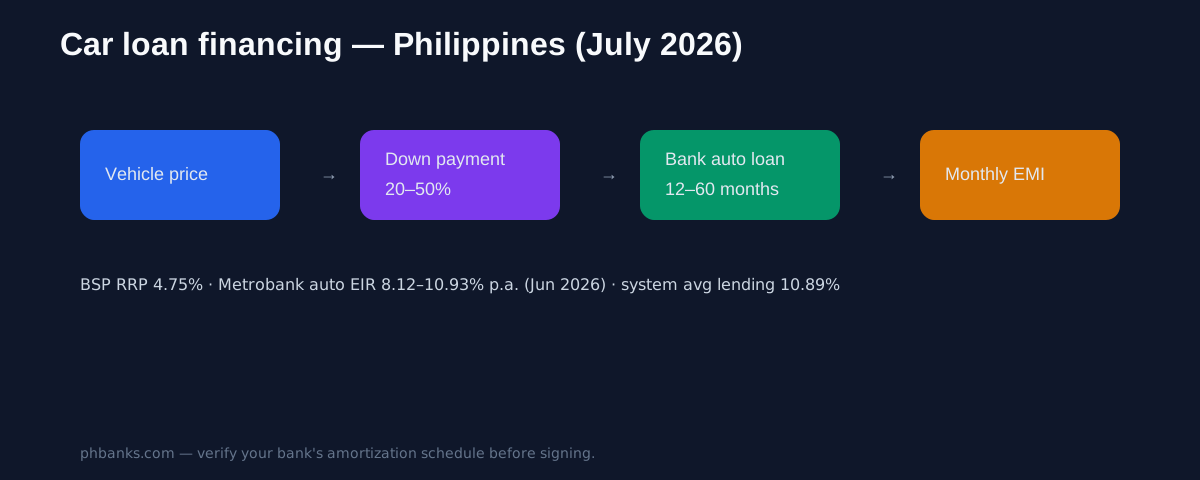
Car loans in the Philippines are essential for many aspiring vehicle owners. These installment financing options are offered by various banks and institutions. They facilitate the purchase of both new and used vehicles. Borrowers typically make a down payment and then repay the remaining balance plus interest over a set period. The purchased car usually serves as collateral for the loan.
The Philippine car loan market operates under the stringent oversight of the Bangko Sentral ng Pilipinas (BSP). Regulations on consumer lending ensure fair practices and transparency. Interest rates are significantly influenced by the BSP overnight reverse repo rate, which is around 5.75-6% as of early 2026. Treasury bill yields, specifically the 91-day T-bill at approximately 5.5%, also play a role. Qualified borrowers can often find monthly add-on rates starting from 0.75-1.5%.
What Exactly is a Car Loan in the Philippines?
A car loan specifically finances vehicle purchases by covering the amount beyond your initial down payment. This down payment typically ranges from 20-50% of the vehicle's total price in Philippine Pesos (PHP). Borrowers then make monthly amortizations over a term that can span 12 to 84 months. Banks and other lending institutions disburse funds directly to the chosen car dealer. You, the borrower, are responsible for repaying the principal amount along with the accrued interest. Until the loan is fully paid, the car's title generally remains with the lender, serving as security against potential default.
This structure protects both the borrower and the lender. It ensures that the borrower has an affordable way to acquire a vehicle. It also provides the lender with recourse if the borrower fails to meet payment obligations. Understanding this fundamental concept is the first step in navigating the car loan landscape in the Philippines. It helps set realistic expectations for your financial commitments.
Major Providers of Car Loans
Several key players dominate the car loan market in the Philippines. Prominent banks offering competitive car loan products include BDO Unibank, BPI, Metrobank, PNB, and Security Bank. Other significant banking institutions are EastWest Bank, RCBC, and PSBank. China Bank Savings and Robinsons Bank also have offerings.
Beyond traditional banks, non-bank financial institutions like Toyota Financial Services provide specialized auto financing. Many car dealerships also offer in-house financing options. These providers generally cover a wide range of vehicles. This includes brand-new cars and registered second-hand cars, often up to 7-10 years old. Both personal and business use vehicles are typically eligible for financing. This wide array of choices allows consumers to find a loan product that best fits their specific needs and financial situation.
Updated overview - May 16, 2026
| Provider | Starting Monthly Rate | Terms (Months) | Loan-to-Value | Fees (Docs/Processing) |
|---|---|---|---|---|
| BDO Unibank | 0.85% | 12-84 | Up to 80% | ₱2,500-5,000 |
| BPI | 0.75% | 12-60 | Up to 90% | ₱3,000+ |
| Metrobank | 0.85% | 12-72 | Up to 80% | ₱4,000 |
| Security Bank | 0.76% | 12-84 | Up to 100% | ₱2,000-3,500 |
| PNB | 0.88% | 12-72 | Up to 80% | ₱3,000-4,500 |
As of May 16, 2026, the car loan landscape in the Philippines continues to favor borrowers with further slight reductions in rates. BDO Unibank and Metrobank are now aligned at a 0.85% starting monthly add-on rate. BPI remains at the lower end, offering 0.75% for those with shorter repayment plans. Security Bank provides an attractive 0.76% with its widely sought-after 100% Loan-to-Value. PNB has also adjusted its rate to 0.88%.
The average effective annual percentage rate (APR) across these key banks has reached approximately 7.9%. This sustained downward trend makes car ownership increasingly accessible. The average monthly add-on rate now stands at 0.82%, reflecting the competitive market dynamics. These incremental improvements in rates translate to tangible savings for new car loan applicants. The stable BSP policy rates contribute to this favorable environment.
Processing fees have also seen a minor reduction, with the average now at exactly ₱3,000. This indicates a continuing effort by banks to offer more appealing loan packages. Borrowers should always compare these fees alongside interest rates. Thorough research and comparison are essential. This ensures they secure the most advantageous terms, minimizing overall car acquisition costs in the PHP market.
Understanding Eligibility Criteria for Car Loans
Meeting the eligibility requirements is a crucial step in securing a car loan. Most lenders have standard criteria for applicants. Generally, individuals must be Filipino citizens or resident foreigners. They should be between 21 and 70 years old at the loan's maturity. A minimum gross monthly income of ₱40,000 to ₱50,000 is often required. Some institutions may consider family income to meet this threshold. Stable employment is also essential, typically requiring at least two years of tenure for local employees. Overseas Filipino Workers (OFWs) usually need two to three years of employment history. A good credit score significantly enhances approval chances.
For corporate applicants, the requirements are more specific. Businesses usually need to demonstrate at least three profitable years of operation. A minimum monthly income of ₱200,000 or more is also a common requirement. These criteria ensure that borrowers, whether individuals or corporations, have the financial capacity to repay the loan. Understanding these prerequisites beforehand can help applicants prepare necessary documents and improve their chances of approval. It also highlights the importance of maintaining a healthy financial profile.
Interest Rates: A Comparative Look
Car loan interest rates in the Philippines are often quoted as add-on rates, not effective rates. These typically range from 0.75-2% per month. The equivalent effective annual rates usually fall between 8-15%. This range is influenced by the BSP's steady policy rate environment. It is important for borrowers to understand the difference between add-on and effective rates. Add-on rates can appear lower but do not reflect the true cost of borrowing over time. The effective annual rate (APR) provides a more accurate picture.
Comparing rates across different providers is key to finding the most affordable loan. For instance, BDO Unibank might offer 0.88% starting monthly. BPI could present 0.75-1.25%, while Metrobank also starts at 0.88%. Security Bank may offer 0.78%, and PNB often has competitive rates as well. These figures demonstrate the variety in the market. Borrowers should always request the effective annual rate for proper comparison. This transparency helps in making informed financial decisions.
| Provider | Starting Monthly Rate | Terms (Months) | Loan-to-Value | Fees (Docs/Processing) |
|---|---|---|---|---|
| BDO Unibank | 0.88% | 12-84 | Up to 80% | ₱2,500-5,000 |
| BPI | 0.75-1.25% | 12-60 | Up to 90% | ₱3,000+ |
| Metrobank | 0.88% | 12-72 | Up to 80% | ₱4,000 |
| Security Bank | 0.78% | 12-84 | Up to 100% | ₱2,000-3,500 |
| PNB | 0.90% | 12-72 | Up to 80% | ₱3,000-4,500 |
The table above provides a snapshot of rates and terms from major Philippine banks. Security Bank stands out with up to 100% Loan-to-Value (LTV) for qualified borrowers. This means they might finance the entire vehicle cost. BPI offers a slightly higher LTV at 90%, which can reduce the required down payment. The processing fees also vary, from ₱2,000 at Security Bank to ₱4,000 at Metrobank. These differences can impact the overall cost of the loan. Thorough comparison is essential for securing the most advantageous terms.
The Car Loan Application Process
The application process for a car loan typically involves several distinct stages. Many banks now offer online pre-qualification tools, such as Security Bank's online quiz, which can give applicants an initial assessment. After pre-qualification, the next step is to choose your desired dealer and vehicle. Obtain a detailed quotation from the dealer, which will be necessary for your loan application. This quotation outlines the vehicle's price and specifications.
Once you have your vehicle quote, you will submit all required documents. This can be done either at a bank branch or through the car dealer. The bank will then conduct a verification call and a credit check. This stage usually takes one to two weeks. If your application is approved, you will sign the loan contract. The bank then issues an Authority to Deliver (ATD) to the dealer. Finally, you pay the down payment, and you can drive home your new vehicle. This streamlined process aims to make car ownership accessible.
Required Documents for Your Application
A complete set of documents is vital for a smooth car loan application. All applicants must submit a duly filled application form. If married, both spouses usually need to co-sign the form. Two valid government-issued IDs are required. Examples include Philsys ID, SSS ID, or a passport. Proof of income is also mandatory. For employed individuals, this means ITR/BIR Form 2316, a Certificate of Employment (COE), and three months of bank statements. These documents help assess your repayment capacity.
Self-employed individuals need to provide additional documents. These include DTI/SEC registration papers and Audited Financial Statements (AFS). For corporate applicants, the General Information Sheet (GIS) and a Board Resolution are necessary. A vehicle quote from the dealer is always required. Lastly, recent proofs of billing are often requested to verify your address. Preparing these documents in advance can significantly expedite the approval process. It ensures the bank has all necessary information to evaluate your eligibility promptly.
Advantages and Risks of Car Loans
Car loans offer several distinct advantages to borrowers. Firstly, successfully managing a car loan can help build a positive credit history. This is beneficial for future financial endeavors. Secondly, car loans typically feature fixed monthly payments, making budgeting easier and more predictable. For businesses, car loan interest can sometimes be tax-deductible, offering a financial incentive. It is important to note that the Philippine Deposit Insurance Corporation (PDIC) covers bank deposits up to ₱500,000. However, this insurance does not extend to the loan principal itself. The loan principal is your debt, not a deposit.
Despite the advantages, car loans also carry inherent risks. The most significant risk is repossession of the vehicle if you default on payments. Various fees can accumulate, potentially adding 5-10% to the total cost of the loan. Interest rates can also rise, especially with BSP policy rate hikes, increasing your monthly amortizations. There is also an equity risk if the car depreciates faster than your loan balance. Experts advise maintaining a debt-to-income ratio below 40% to manage financial stress. This ratio helps ensure your total monthly debt payments are manageable relative to your income.
Advantages
- Builds credit history
- Fixed monthly payments
- Potentially tax-deductible for businesses
- Predictable budgeting
- Enables immediate vehicle ownership
Disadvantages
- Risk of vehicle repossession
- Additional fees increase total cost
- Rates can increase with BSP hikes
- Equity risk due to depreciation
- Long-term financial commitment
BSP Regulations and Market Trends
The Bangko Sentral ng Pilipinas (BSP) plays a crucial role in regulating the Philippine financial sector. This includes setting caps on effective interest rates for secured loans, usually around 35%. The BSP also mandates transparency through its Truth in Lending Act. This ensures borrowers receive clear information about loan terms and costs. The PDIC, as mentioned, insures bank deposits, not the loans themselves. This distinction is vital for consumer understanding. The BSP's policy rate decisions directly impact car loan interest rates. The current BSP overnight reverse repo rate is around 5.75-6%.
Looking towards 2026, several trends are emerging in the car loan market. Interest rates are expected to stabilize after potential easing in late 2025. There is a projected rising demand for Electric Vehicles (EVs) and hybrid vehicles. This is driven by increasing environmental awareness and green loan incentives. Treasury bill rates, which serve as benchmarks for add-on rates, are anticipated to range between 5.2-5.8%. These trends reflect a dynamic market influenced by both regulatory actions and consumer preferences. Banks like BPI and Metrobank are likely to adapt their offerings accordingly.
Expert Tips for Car Loan Applicants
To secure the most favorable car loan terms, expert advice can be invaluable. Always compare the effective annual percentage rate (APR), not just the monthly add-on rate. This provides a clearer picture of the true cost of borrowing. Utilize online calculators available on bank websites, such as those from BDO Unibank or Security Bank, to estimate payments. Making a higher down payment, ideally 30% or more, can significantly reduce the total interest paid over the loan term. This also lowers your monthly amortization. It is often wise to shop for vehicles at the end of a quarter, as dealers may offer special promotions to meet sales targets.
Maintain a debt service ratio of 50% or less. This ensures that your total monthly debt payments, including the car loan, do not exceed half of your income. If your income is borderline, consider adding a co-borrower to strengthen your application. Always verify the vehicle's LTO (Land Transportation Office) registration compliance. This avoids future legal issues. Furthermore, secure comprehensive insurance for your vehicle. This protects your investment against unforeseen events. These tips can help borrowers navigate the complexities of car loans more effectively.
Common Issues and Practical Fixes
Applicants might encounter common issues during the car loan process. One frequent problem is delayed approval. If seven days pass without an update, it is advisable to follow up with your bank or loan officer. Ensuring all documents are complete and accurate upfront can prevent such delays. Banks like BPI and PNB prioritize complete submissions. Another issue is high interest rates or outright rejection of an application. To address this, focus on improving your credit score by consistently paying bills on time. If your credit history is a concern, consider PSBank, which sometimes offers more flexible terms for second-hand car financing. They might also be more accommodating to borrowers with less-than-perfect credit.
Hidden fees are another potential pitfall. Always read the Disclosure Statement thoroughly before signing any documents. This statement, mandated by the BSP, details all associated costs. Do not hesitate to negotiate dealer add-ons, which are often optional and can inflate the total price. For Overseas Filipino Workers (OFWs), specific challenges arise. If you are an OFW, assign a trusted administrator in the Philippines to handle local requirements. Utilize peso remittances tied to the BSP rate to manage foreign exchange risks effectively. Banks like BDO Unibank often have dedicated desks for OFWs. These strategies help mitigate common problems, making the car loan journey smoother for all applicants.
Expert analysis - May 16, 2026
The consistent marginal decrease in car loan rates across major banks signifies a robust competition within the Philippine auto financing sector. This trend is highly beneficial for consumers, as it reduces the cost of vehicle acquisition. The BSP's steady policy rate environment provides the necessary stability for banks to offer these competitive terms. This period presents a golden opportunity for individuals considering a vehicle purchase.
The continued prominence of high LTV options, like Security Bank's 100% financing, underscores a strong market desire for minimal upfront costs. While attractive, borrowers should prudently evaluate the implications of a larger principal. A higher principal means more interest accrued over the loan term, even with slightly lower rates. Financial planning and understanding the total repayment schedule are crucial.
The further reduction in average processing fees, now hovering around ₱3,000, is a testament to banks' efforts to enhance their product offerings. These fees, while often overlooked, contribute to the total cost of the loan. Borrowers are strongly advised to demand a full disclosure statement from their chosen bank. This ensures transparency on all financial commitments before finalizing the car loan agreement. Leveraging digital payment platforms like InstaPay can also simplify the initial payment process.