






HOMELOAN-PH-20260927A home loan in the Philippines comes from one of two places: the Pag-IBIG Fund or a bank. In 2026, Pag-IBIG is usually cheaper for loans up to ₱10 million. Its ceiling rose from ₱6 million in May 2026. Applications received until 31 December 2026 get a promo rate of 4.5% on low-cost loans or 5.75% on larger ones, fixed for three years. Banks move faster: approval takes about 5 to 10 banking days, against 17 working days in Pag-IBIG's service charter. They also charge more, and BPI's August 2026 promo, for example, priced a five-year fixed rate at 7.25%.
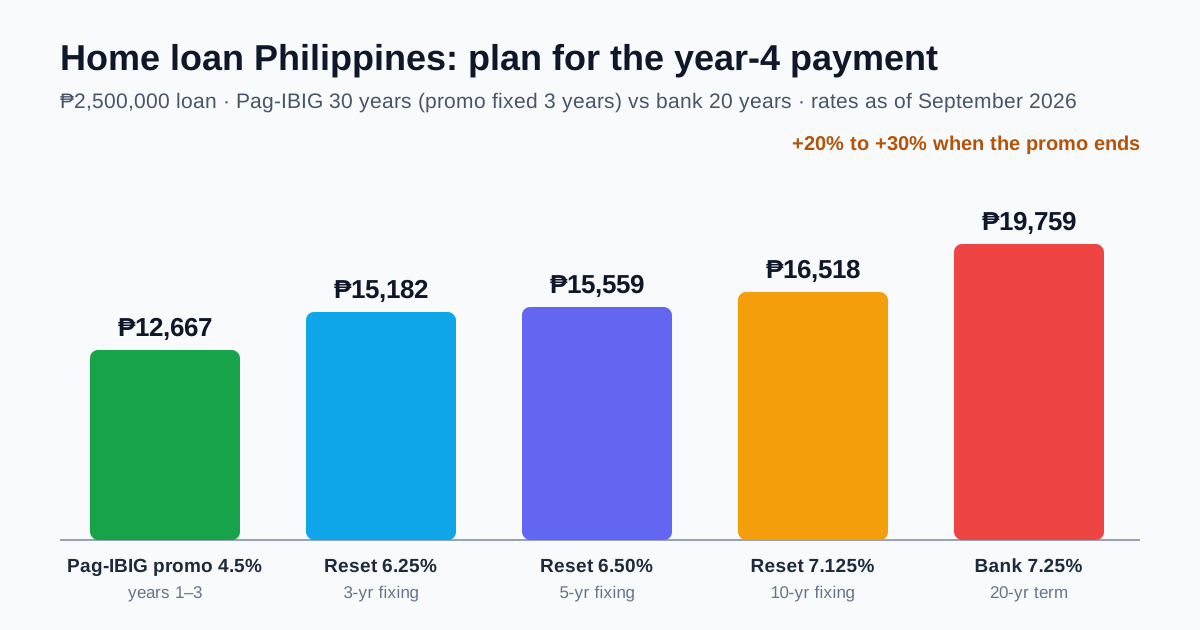
What most first-time buyers miss is that no Pag-IBIG or bank rate lasts for the whole loan. Every rate is fixed for a period and then repriced. On a ₱2.5 million, 30-year Pag-IBIG loan, the monthly payment is ₱12,667 during the three promo years. From year four it rises to roughly ₱15,200 to ₱16,500, depending on the new fixing period you choose. Plan your budget around the year-four payment, not the promo one.
The payment to plan for is the one in year four
Pag-IBIG's own example for the June 2026 promo uses a ₱2.5 million loan over 30 years: ₱12,667 a month at 4.5%, against ₱15,393 at the previous 6.25% three-year rate. The table below takes the same loan to month 37. By then about ₱2.37 million is still owed, and it is repriced at Pag-IBIG's regular table for whatever fixing period you pick next. The bank line shows the same ₱2.5 million over 20 years at 7.25%, a common bank setup because many banks cap terms at 20 to 25 years.
| Scenario (₱2,500,000 loan) | Rate | Monthly amortization | Gross income needed at 35% |
|---|---|---|---|
| Pag-IBIG promo, years 1–3 (30-year term) | 4.5% | ₱12,667 | about ₱36,200 |
| Pag-IBIG from year 4, next fixing 3 years | 6.25% | ≈ ₱15,180 | about ₱43,400 |
| Pag-IBIG from year 4, next fixing 5 years | 6.50% | ≈ ₱15,560 | about ₱44,500 |
| Pag-IBIG from year 4, next fixing 10 years | 7.125% | ≈ ₱16,520 | about ₱47,200 |
| Bank, 20-year term, 5 years fixed | 7.25% | ≈ ₱19,760 | about ₱56,500 |
The reset rows use Pag-IBIG's regular rates by fixing period: 6.25% for three years, 6.50% for five and 7.125% for ten. The income column applies the common rule that the amortization should stay within 35% of gross monthly income. Pag-IBIG and banks use it as a ceiling, and your other debts count against the same limit. The practical takeaway is simple. If ₱15,000 to ₱16,500 a month would strain you in 2029, the promo rate does not make the loan affordable. It only delays the problem.
Pag-IBIG or a bank: where each one wins
| Point of comparison | Pag-IBIG Fund | Commercial bank |
|---|---|---|
| Who can apply | Members with at least 24 monthly contributions; missing months can be paid in a lump sum before filing | Anyone who meets the bank's income floor, often ₱40,000–₱50,000 gross a month for the family |
| Rates (2026) | 3% socialized (4PH); 4.5% / 5.75% promo fixed 3 years; regular table 5.75% (1 year) to 9.75% (30 years) | Promo fixed rates in the 6.5%–7.25% band for 1–5 years at BPI in August 2026; repriced yearly or by new fixing after that |
| Maximum loan and term | ₱10 million, up to 30 years | Tens of millions at big banks; terms mostly 20–25 years |
| Age limit | 65 at application, loan must end by 70 | Set by each bank, typically 65 or 70 at maturity |
| Speed | 17 working days to approve under the Citizen's Charter; 2–3 months to takeout is common | 5–10 banking days to approve; 30–60 days to release |
| Paying early | Partial or full prepayment without penalty | Fees or break-funding costs outside the repricing date; promo fee waivers are clawed back inside the lock-in |
A bank makes sense when speed matters more than rate. That covers a resale house where the seller will not wait three months, a price above ₱10 million, or a self-employed borrower whose bank already knows the account history. Pag-IBIG makes sense for nearly everyone else, and especially for anyone who expects to prepay. Its free prepayment is worth more than half a percentage point to a borrower who plans to pay down with bonuses or remittances. You can also switch later. Pag-IBIG lists refinancing of an existing bank housing loan as a loan purpose, provided the bank account is updated and in good standing.
If you are leaning towards a bank, our comparison of Philippine mortgage lenders lays out each bank's current fixed rates side by side. This guide stays with the process.
Who qualifies for the 3% rate
The subsidized 3% rate under the Expanded 4PH program is only for socialized housing. As reported in March 2026, it goes to first-time buyers earning less than ₱47,856 a month in Metro Manila or less than ₱34,686 elsewhere. All OFWs qualify regardless of income. The home itself must fall under the socialized price ceilings updated in January 2026:
- House and lot: ₱844,440 for 24–26 m² units and ₱950,000 for 27 m² and above.
- Condominium: up to ₱1.8 million for buildings above five floors with units of 27 m² or more, and up to ₱2 million in some Metro Manila and highly urbanized city categories.
- Duration: the 3% runs for the first five years and can be extended for another five for eligible borrowers. The first 30,000 qualified borrowers under the Early Bird promo get ten years from the start.

At 3% over 30 years, a ₱950,000 house and lot costs about ₱4,005 a month. That is less than many rents in the same towns, which is why these units sell out quickly in accredited projects.
How much you can actually borrow
Two limits apply, and the lower one wins. The first is the property. Both Pag-IBIG and banks lend against the lower of the contract price and their own appraisal. Banks typically finance up to 80% of that value, or up to 90% in accredited developer projects. If you agree to pay ₱5.0 million and the appraiser says ₱4.2 million, an 80% loan is ₱3.36 million, not ₱4.0 million. The ₱640,000 gap becomes extra cash you must bring. You can pay it, renegotiate the price using the appraisal report, or ask whether the lender allows a second appraisal.
The second limit is income. Existing debts come off the top: if you earn ₱100,000 and already pay ₱10,000 a month on a car, a 35% ceiling leaves ₱25,000 for the house, not ₱35,000. Age compresses the term too. Someone applying at 52 against a maturity limit of 70 gets at most 18 years, and a shorter term means a higher payment against the same income ceiling. Lenders also check your record with the Credit Information Corporation, so clear any past-due cards before you file. Our guide on how to get and read your credit report explains how.
From reservation to takeout: the actual sequence
- Pre-qualify. Ask the lender for a pre-qualification or loan computation based on your documented income before paying a reservation fee.
- Reserve and pay equity. With a pre-selling unit, the 10% to 20% equity is usually spread over 12 to 60 interest-free monthly payments while the building goes up.
- File the loan and get the property appraised. Appraisal usually takes one to three weeks and runs alongside the credit check.
- Receive the approval. This is the Notice of Approval at Pag-IBIG or the Letter of Approval at a bank. Then sign the promissory note and the real estate mortgage.
- Transfer and register. The deed of sale, BIR clearance and the mortgage go through the Registry of Deeds, and a new title is issued with the lender's lien annotated.
- Takeout. The lender releases the balance to the seller or developer, usually 3 to 15 banking days after the mortgage is registered. The first amortization falls due about 30 days later.
For pre-selling units, takeout comes at turnover, when the developer sends the lender a letter of guarantee. Many buyers apply only at that point, two or three years after reserving, and discover late that their income or credit record has changed.
Documents by type of borrower
Employed: application form, two government IDs, a certificate of employment showing salary and tenure, the last one to three months of payslips, and BIR Form 2316. Self-employed: DTI or SEC registration, a mayor's permit, two years of audited financial statements and income tax returns (BIR 1701 or 1702), and six to twelve months of bank statements. Businesses younger than two to three years struggle at every lender. OFWs: a verified employment contract or certificate of employment and compensation, three to six months of remittance records, and a Special Power of Attorney naming a representative in the Philippines. In Apostille Convention countries, the SPA needs notarization and an apostille. Elsewhere, the Philippine embassy or consulate must authenticate it. Spell every name exactly the same way across IDs, BIR forms and your Pag-IBIG record. Mismatched middle names are a routine reason for delays.
Cash you need on top of the down payment
Buyers usually pay these costs themselves, outside the loan. Here is the example of a ₱3.0 million condo in Metro Manila financed with a ₱2.5 million loan:
| Item | Rule | On the example | Usually paid by |
|---|---|---|---|
| Documentary stamp tax on the sale | 1.5% of price or zonal value, whichever is higher | ₱45,000 | Buyer |
| Local transfer tax | Up to 0.75% in Metro Manila, up to 0.5% in provinces | ₱22,500 | Buyer |
| Documentary stamp tax on the mortgage | ₱40 on the first ₱5,000 plus ₱20 per additional ₱5,000 | ≈ ₱10,000 | Borrower |
| Registration at the Registry of Deeds | Graduated LRA fee schedule | Varies with value | Buyer |
| Capital gains tax | 6% of price or zonal value | ₱180,000 | Seller, unless the deed says otherwise |
| Mortgage redemption and fire insurance | Required by every lender; billed yearly or built into the amortization | Per insurer quote | Borrower |
Developers often add move-in fees, meter deposits and advance association dues at turnover. Read the reservation agreement for these before signing. Bank promos sometimes waive the lender's own charges. BPI's August 2026 promo waived ₱5,000 per ₱1 million of loan, up to ₱170,000. Waivers like this come with a lock-in, and repaying or refinancing inside it usually brings the fees back.
If the loan is denied or the numbers stop working
When a pre-selling buyer is denied at turnover, the developer usually offers in-house financing. It asks for fewer documents but charges much more than Pag-IBIG or a bank, so treat it as a bridge you refinance out of. Other exits are selling your rights to another buyer (a pasalo) or cancelling. The Maceda Law (Republic Act 6552) protects installment buyers of residential property. With at least two years of installments paid, you are entitled to a refund of 50% of what you paid, plus 5% for each year beyond five, up to 90%. With less than two years paid, you get a 60-day grace period but no refund. Pause at reservation and ask yourself one question: if my income stays the same for three years, will I still pass at turnover?
Once you own the home, the same property can later secure other borrowing. Our guide to collateral loans in the Philippines explains when that makes sense and when it only puts your title at risk.