





The Financial Comparison Guide of the Philippines

Navigating Philippine Mortgage Lenders: Your Guide to Home Loans

10 Reading Time Updated Apr 27, 2026
Maria Cruz

Digital Banking Specialist

Expert in digital banking and fintech in the Philippines

Understanding Mortgage Basics in the Philippines

Mortgage lenders in the Philippines primarily consist of established banks and government institutions. The Pag-IBIG Fund is a prominent example, offering housing loans to eligible members. These loans, often called home loans, are designed to finance property purchases. The property itself serves as collateral for the loan.

Philippine mortgage loans operate with either fixed or variable interest rates. These rates are typically benchmarked against indicators like the BSP overnight rate or T-bill rates. Borrowers make regular repayments, covering both principal and interest, over terms ranging from 5 to 30 years. Banks commonly finance up to 80% of the property's value in Philippine Pesos (PHP).

Housing loans can fund various property types, including houses, lots, condominiums, or even home renovations. Before approval, lenders appraise the property's value. A standard requirement for borrowers is to provide a 20-25% downpayment. This initial equity reduces the loan amount and borrower risk.

Initial interest rates often start low, around 6.5-7.5% fixed for the first 1-5 years. After this fixed period, the rate typically floats. Floating rates adjust based on BSP policy rates, which were approximately 5.75% in early 2026, or 91-day T-bill rates, usually hovering around 5-6%. The Pag-IBIG Fund generally offers lower rates, around 6-7%, but caps loans at ₱6 million. For larger amounts, up to ₱50 million, banks like BDO Unibank are more suitable.

Key Mortgage Providers and Their Offerings

The Philippine mortgage market is largely dominated by major commercial banks. Key players include BDO Unibank, BPI, Metrobank, PNB, and Security Bank. Other significant banks offering home loans are RCBC, Maybank, UnionBank, and China Bank. These institutions provide a wide range of loan products catering to different borrower needs.

Beyond commercial banks, the Pag-IBIG Fund, also known as the Home Development Mutual Fund (HDMF), stands out. It is a top non-bank option renowned for its affordability and member-centric approach. Other institutions like Landbank serve rural areas, and Development Bank of the Philippines (DBP) also offers housing loans. All these financial entities are regulated by the Bangko Sentral ng Pilipinas (BSP), ensuring stability and consumer protection.

It is important to note that while deposits in BSP-regulated banks are insured by the Philippine Deposit Insurance Corporation (PDIC) up to ₱500,000, housing loans themselves are not insured. The property purchased serves as the sole security for the loan. This structure protects the lender in case of borrower default.

Each lender has specific strengths. BDO Unibank often features flexible promos. BPI offers a streamlined application process. Metrobank is known for personalized service. PNB provides low documentation requirements for Overseas Filipino Workers (OFWs) and allows for reconstruction loans. Security Bank focuses on condominium financing, while RCBC offers flexibility for renovation loans. Maybank ensures all properties are appraised before loan approval.

Updated overview - April 27, 2026

LenderMin Loan (₱)Interest (Fixed Initial)Max TermNotes
BDO Unibank1,000,0006.60% (1-yr)25 yrsExclusive client benefits
BPI500,0006.65% (1-yr)20 yrsOnline application preferred
Metrobank500,0007.60% (1-yr)20 yrsDedicated relationship managers
PNB400,0006.85% (1-yr)30 yrsLoans for property renovation
Security Bank1,000,0006.95% (1-yr)20 yrsPremium banking experience
5.75%
BSP Overnight Rate
5.55%
91-Day T-Bill Rate
₱6M
Pag-IBIG Loan Cap

As of April 27, 2026, fixed mortgage rates continue their slight downward trajectory. BDO Unibank now offers a 1-year fixed rate of 6.60%, appealing to clients seeking strong value. BPI follows closely with 6.65% for a 1-year fixed term, emphasizing digital convenience.

Metrobank's 1-year fixed rate is 7.60%, maintaining its focus on personalized service through dedicated relationship managers. PNB provides a 6.85% 1-year fixed rate, also extending to property renovation loans. Security Bank’s 1-year fixed rate is 6.95%, reflecting its premium banking offerings.

The BSP overnight rate has slightly adjusted to 5.75%, while the 91-day T-bill rate shows a marginal decrease to 5.55%. Pag-IBIG Fund maintains its loan cap at ₱6 million for members, offering an affordable alternative to commercial banks. All these institutions are BSP regulated, and deposits are covered by PDIC.

Eligibility Criteria for Home Loans

Meeting the eligibility requirements is crucial for securing a home loan in the Philippines. Generally, applicants must be Filipino citizens or residents, aged 21 to 65 at the time of application, and up to 70 years old upon loan maturity. Some banks, like BPI and Metrobank, may extend eligibility to qualifying foreigners, particularly those with investor visas.

A stable income is a fundamental requirement. Minimum monthly income usually ranges from ₱20,000 to ₱50,000, depending on the specific bank's policies and the loan amount requested. Lenders also assess the applicant's debt-to-income ratio, which typically must be under 40-50%. A good credit history, verifiable through the Credit Information Corporation (CIC) report, is essential for approval.

For employed individuals, banks usually require a minimum of two years of continuous employment tenure. Self-employed applicants must demonstrate a stable business operation, often requiring three years of Income Tax Returns (ITR). The property itself must be located in an approved area and meet the lender's valuation standards. The maximum loan-to-value (LTV) ratio is commonly 80%.

Comparing Top Lenders: Rates and Terms

Choosing the right mortgage lender involves comparing various factors, including minimum loan amounts, initial fixed interest rates, maximum loan terms, and associated fees. Each bank offers distinct features tailored to different client segments. Rates provided are approximate as of late 2025 and are subject to change, especially variable rates after the initial fixed period.

LenderMin Loan (₱)Interest (Fixed Initial)Max TermFeesNotes
BDO Unibank1,000,0006.75% (1-yr)25 yrs1-2% processingFlexible promos, higher loan amounts
BPI500,0006.8-7.5%20 yrsAppraisal ~₱5KStreamlined application, competitive rates
Metrobank500,0007.75% (1-yr), 8.75% (5-yr)20 yrsUp to 80% LTVPersonalized service, wide branch network
PNB400,0007-8%30 yrsLow doc for OFWsReconstruction loans, long terms
Security Bank1,000,0007-9%20 yrsGood customer svcCondo focus, higher income requirements
RCBC300,0006.88-11%20 yrsRenovation flexibleOnline application options
Maybank500,0006.75% (1-yr)20 yrsAppraisal non-refundAll properties appraised
Pag-IBIG Fund120,0006.15-7.4%30 yrsGovt-backed, low feesMembers only, lower interest for socialized housing

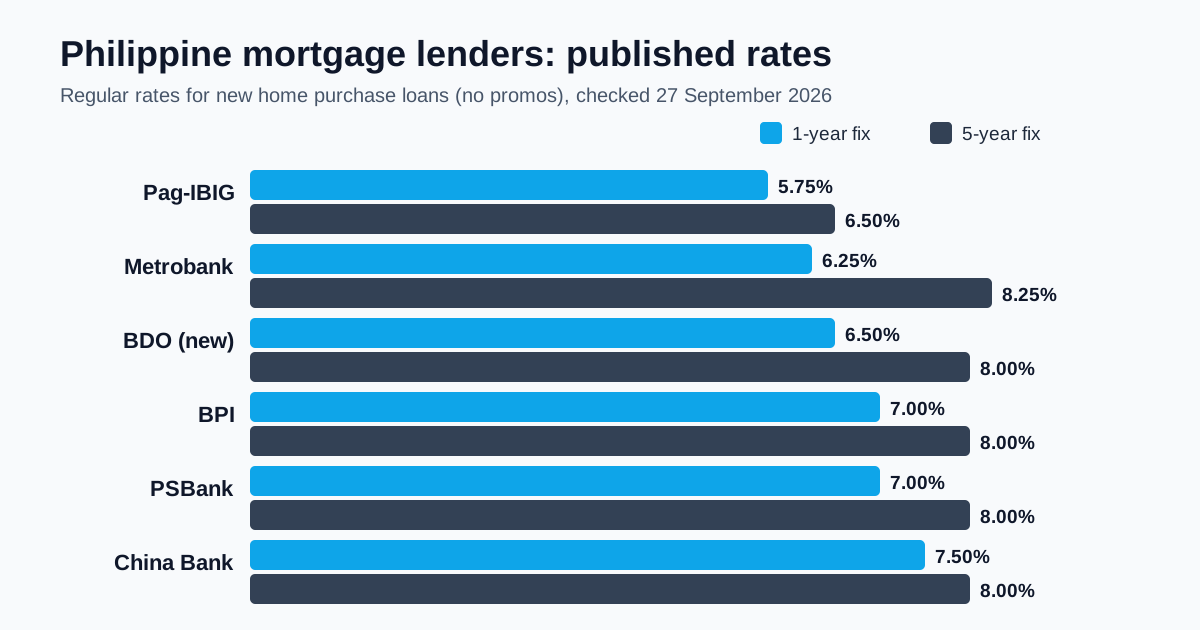
It is advisable to compare current rates directly through the BSP's official website or financial comparison platforms. Rates for BDO Unibank often start around 6.75% for a one-year fixed term. BPI offers rates between 6.8% and 7.5%. Metrobank's one-year fixed rate is 7.75%, while a five-year fixed rate is 8.75%. PNB provides rates typically between 7-8%, and Security Bank's rates range from 7-9%. RCBC has a wider range from 6.88-11%, and Maybank offers 6.75% for a one-year fixed term. Pag-IBIG Fund's rates are generally lower, from 6.15-7.4%.

The Application Process: Step-by-Step Guide

Applying for a home loan involves several key steps. First, borrowers should assess their affordability. Using online calculators helps estimate monthly amortizations. A common guideline is to ensure monthly payments are less than 30% of gross monthly income. This prevents financial strain and increases the likelihood of loan approval.

Next, check eligibility requirements and pre-qualify either online or by visiting a bank branch. This initial check saves time and ensures applicants meet the basic criteria. Once pre-qualified, gather and submit all required documents to the chosen lender. The bank will then conduct a property appraisal, which typically takes one to two weeks.

Upon satisfactory appraisal and document verification, the loan application proceeds to approval. This stage can take two to four weeks. Once approved, borrowers will sign the loan documents. Following this, the downpayment and any associated fees are paid. The bank then releases the loan funds directly to the property seller. Finally, the mortgage is registered with the Registry of Deeds, and regular loan payments commence. For efficient transactions, banks increasingly use digital platforms like InstaPay and PESONet for fund transfers.

Required Documents for Your Home Loan

Preparing the necessary documents in advance streamlines the loan application process. Essential personal documents include two valid government-issued IDs and a Tax Identification Number (TIN). Proof of income is critical and varies based on employment status.

For employed individuals, common requirements are Income Tax Returns (ITR) or BIR Form 2316 for the past two years, along with the latest three to six months of payslips and a Certificate of Employment (COE). Self-employed applicants need to provide DTI/SEC registration, audited financial statements, and bank statements for the past six to twelve months. These documents demonstrate financial stability and capacity to pay.

Property-related documents are also vital. These include the Contract to Sell (CTS), Transfer Certificate of Title (TCT) or Original Certificate of Title (OCT), tax declarations, and real estate tax clearances. An appraisal report from the bank is also required. For Overseas Filipino Workers (OFWs), additional documents such as a passport, employment contract, and overseas ITR may be needed. Many banks now encourage digitizing these documents for faster processing through their mobile applications.

Pros, Risks, and Key Considerations

Advantages

  • Builds equity and asset ownership over time.
  • Interest payments can be tax-deductible (e.g., up to ₱2.5M for Pag-IBIG).
  • Leverages potentially low BSP interest rates for financing.
  • Secures a tangible asset that can appreciate in value.
  • Offers a stable housing solution compared to renting.

Disadvantages

  • Risk of foreclosure if loan defaults, leading to property loss.
  • Vulnerability to rate hikes, especially with variable interest loans.
  • Accumulation of various fees (processing, appraisal, documentary stamp tax).
  • Property values can depreciate, impacting equity.
  • Long-term financial commitment.

Obtaining a home loan offers several significant advantages. It allows individuals to build equity over time, transforming monthly payments into a valuable asset. The interest paid on housing loans can also be tax-deductible, providing financial relief, especially for Pag-IBIG members up to ₱2.5 million. Leveraging current low BSP rates can make property ownership more accessible and affordable.

However, potential risks must be acknowledged. The most significant risk is foreclosure if a borrower defaults on payments. In such cases, the bank can auction off the property to recover the outstanding loan amount. Borrowers also face the risk of rate hikes, particularly with variable interest loans. An increase in T-bill rates or BSP policy rates could lead to a 2-3% rise in monthly payments. Various fees, often totaling 1-3% of the loan amount, are also part of the overall cost.

It is important to remember that while deposits are PDIC-insured, loans themselves are not. Always pay on time to avoid penalties and maintain a good credit standing. The BSP imposes a cap on interest rate spreads, typically 2% over benchmarks, to protect consumers. Inflation and peso volatility can also affect the real cost of PHP-denominated loans over their long term. Understanding these factors is crucial for informed decision-making.

The Bangko Sentral ng Pilipinas (BSP) plays a crucial role in regulating the housing loan market. BSP Circular 941, for instance, sets guidelines for maximum loan terms, typically up to 35 years. The BSP's overnight rate, which was around 5.75% in March 2026, significantly influences variable interest rates offered by commercial banks. The PDIC ensures deposit safety but does not cover loan obligations.

Current trends show a relatively stable interest rate environment, especially after anticipated rate cuts post-2024. Demand for condominiums remains high, particularly in the National Capital Region (NCR). There is also a growing interest in green loan incentives, encouraging sustainable property development. The Pag-IBIG Fund reported substantial releases, reaching ₱128 billion in 2025, indicating strong member demand for housing assistance. Observing T-bill rates, which typically range from 5.5-6%, is important for understanding potential adjustments to variable loan rates.

Expert Tips for Securing Your Mortgage

When seeking a home loan, it is wise to shop around. Compare offers from at least three different lenders to find the most favorable terms. If eligible, consider the Pag-IBIG Fund, as it often provides lower interest rates for its members. Locking in a fixed rate for 3-5 years can provide stability, especially if BSP anticipates further rate cuts. This strategy can shield borrowers from immediate rate fluctuations.

To reduce the total interest paid over the loan term, make prepayments on the principal whenever possible. Engaging a lawyer to review all loan documents is highly recommended to ensure understanding of terms and conditions. Time your application strategically, ideally after the Transfer Certificate of Title (TCT) transfer is complete, to avoid delays. For condominium purchases, inquire about developer tie-ups with banks, as these can sometimes offer special promos or more flexible terms, such as those sometimes offered by BDO Unibank. Avoid seeking 100% financing; saving for a 20%+ downpayment is financially prudent and often required.

Common Issues and Practical Solutions

Applicants may encounter various challenges during the home loan process. Delays often arise from incomplete documentation. To mitigate this, prepare and scan all required documents early in the process. Some banks, like Tonik Bank, facilitate digital document submission. Rejection can occur due to low income or a poor credit score (CIC). In such cases, consider improving your credit score, increasing income stability, or adding a co-borrower to strengthen the application.

If initial interest rates seem too high, do not hesitate to negotiate with the lender. If negotiation fails, consider switching to another bank after the initial fixed-rate period. Overseas Filipino Workers (OFWs) might face hurdles with document verification. Using consulate-attested documents can help overcome these issues. For those fearing foreclosure, banks often provide grace periods, typically 3-6 months. Refinancing the loan at a lower BSP rate can also be an option. For disputes or complaints, the Housing and Land Use Regulatory Board (HLURB) is the appropriate body to consult.

Expert analysis - April 27, 2026

The marginal decrease in fixed rates from major banks, even with a slight upward adjustment in the BSP overnight rate, indicates strong competition. Lenders are keen on attracting borrowers, offering more favorable initial terms. This environment presents an opportune moment for potential homeowners to secure competitive loan rates, particularly for fixed-rate products.

The stable performance of the 91-day T-bill rate at 5.55% suggests that variable rates, when they reset after the fixed period, will likely remain within a reasonable range. This predictability is crucial for long-term financial planning. Borrowers should consider scenarios where rates might increase slightly, ensuring their repayment capacity remains robust.

For smaller loan amounts, the Pag-IBIG Fund remains an unparalleled choice due to its lower interest rates and government backing. For higher values, commercial banks like BDO Unibank and BPI offer flexibility and competitive rates. Always remember to assess not just the interest rate, but also the total fees and charges, including documentary stamp tax and processing fees, which can add up to 1-3% of the loan amount.

Important
Carefully review the loan's lock-in period and pre-termination clauses. Early repayment penalties can sometimes negate the benefits of refinancing or principal prepayments.
Avg 1-yr Fixed Rate
6.93%
BSP Overnight Rate
5.75%
Loan Processing Time
2-4 Weeks

Share this article

Frequently Asked Questions about Best Mortgage Lenders in the Philippines

When selecting a mortgage lender, consider interest rates (both fixed and variable), loan terms, processing fees, and the lender's reputation for customer service. It's also important to assess their flexibility regarding down payments and specific loan requirements that match your financial situation.

While interest rates are crucial as they directly impact your monthly payments, they are not the sole factor. Look at the total cost of the loan, including all fees (processing, appraisal, documentary stamp tax, etc.), and the convenience and speed of their application process. A lower interest rate might come with higher upfront costs or stricter terms.

In the Philippines, mortgage loans are primarily offered by commercial banks, government financial institutions like Pag-IBIG Fund, and some private lending companies. Each type of institution caters to different borrower profiles and offers varying loan products and interest rates.

The Pag-IBIG Fund Housing Loan is a government-mandated program offering affordable housing finance to its members, often with lower interest rates and longer payment terms compared to commercial banks. Commercial banks typically offer more flexibility in loan amounts and property types, but may have stricter eligibility criteria and higher rates.

Commonly required documents include proof of income (payslips, ITR, certificate of employment), valid IDs, certificate of land title, tax declaration, and a housing loan application form. Additional documents may be requested depending on your employment status (employed, self-employed, OFW) and the specific lender.

The application and approval process can vary widely, typically ranging from 2 weeks to 2 months. Factors influencing this timeline include the completeness of your documents, the lender's internal processing speed, and the complexity of your financial situation. Some lenders offer express processing for an additional fee.

Yes, many banks and Pag-IBIG Fund offer specific housing loan programs for OFWs. These often require a Special Power of Attorney (SPA) for a representative in the Philippines, proof of remittances, and employment contracts. The terms and conditions may differ slightly from local borrower programs.

Mortgage pre-qualification is an initial assessment by a lender of how much you might be able to borrow based on a quick review of your finances. It's useful because it gives you an idea of your borrowing capacity before you start seriously looking for a property, helping you set a realistic budget and saving time.

While lenders are generally transparent, always ask for a complete breakdown of all fees. Beyond the principal and interest, watch out for processing fees, appraisal fees, documentary stamp tax, mortgage redemption insurance (MRI), fire insurance, and notarial fees. These can significantly add to the total cost.

A mortgage broker can be beneficial as they work with multiple lenders and can help you compare different loan products and secure the best rates for your situation. They can also assist with the application process and provide expert advice, potentially saving you time and money. However, be aware of their fees.

Related Articles

Best Egg Loan in Philippines? Local Alternatives Explained

This article clarifies why Best Egg loans, a US-based offering, are not accessible in the Philippines. It then provides a detailed overview of local personal loan alternatives from major Philippine banks, including BDO, BPI, Metrobank, PNB, and Security Bank, complete with rates, requirements, and regulatory insights from BSP and PDIC.

Apr 26, 2026

BDO Personal Loan: Rates, Eligibility & Comparison (2026)

BDO Personal Loan offers quick funding for various needs. This guide details its features, eligibility, application process, and compares it against other major Philippine banks.

Apr 23, 2026

BDO Car Loan Philippines: Rates, Requirements, & Comparison

This guide details BDO car loan offerings, including interest rates, eligibility, and the application process. We also provide a comprehensive comparison with other major Philippine banks for both new and used vehicle financing.

Apr 20, 2026

Philippine Balloon Mortgages: Risks & Alternatives

Balloon mortgages are uncommon in the Philippine home loan market. This guide explains their mechanics, risks, and why fully amortizing loans dominate. Understand BSP regulations and find safer options.

Apr 17, 2026