






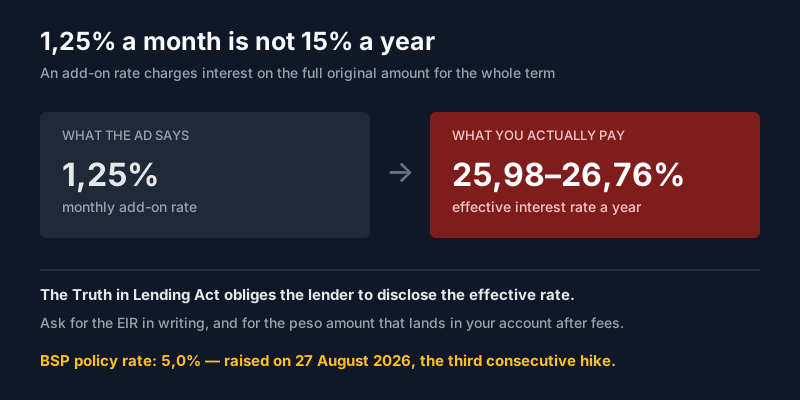
BDOLOAN-PH-20260908The BDO Personal Loan is advertised at a monthly add-on rate of 1,25%, and the arithmetic most people do in their head — twelve times 1,25% is 15% a year — is wrong. The bank’s own disclosure puts the effective interest rate between 25,98% and 26,76% a year depending on tenor. That is not a hidden charge; it is how an add-on rate works, and it is the single most useful thing to understand before signing anything in the Philippine consumer market.
For context, the BSP policy rate is 5,0%, raised by 25 basis points on 27 August 2026 in the third consecutive hike. Unsecured personal credit at roughly 26% sits where you would expect it to sit against that backdrop — the surprise is only in the presentation.
What BDO actually charges
| Tenor | Monthly add-on rate | Effective interest rate a year |
|---|---|---|
| 6 months | 1,30% | 26,27% |
| 12 months | 1,25% | 26,63% |
| 18 months | 1,25% | 26,76% |
| 24 months | 1,25% | 26,58% |
| 36 months | 1,25% | 25,98% |
Notice what the table does that the advertised rate cannot: four of the five tenors carry the same 1,25% add-on, yet their effective rates differ, and the highest cost is not the longest term but the 18-month one at 26,76%. The 36-month tenor has the lowest effective rate in the range. That is counterintuitive enough to be worth pausing on — and it is also only half the story, which we come back to below.
Why 1,25% becomes 26%
An add-on rate computes interest on the full original principal for the entire term, regardless of how much you have already repaid. Borrow ₱100.000 over 12 months and the interest is calculated on ₱100.000 in month eleven too, even though your outstanding balance is a fraction of that by then. A conventional declining-balance loan charges interest only on what you still owe, which is why the same headline number produces a very different cost.
The effective interest rate is what makes the two comparable, and Philippine law is on your side here: the Truth in Lending Act requires the lender to disclose the effective rate and the full finance charge before you commit. If a lender quotes only the add-on rate and will not put the EIR in writing, that is not a style preference — it is a disclosure the law expects them to make.
The tenor decision is not the EIR decision
Because the 36-month option carries the lowest effective rate, it looks like the obvious pick. It is not, and the reason is simple arithmetic that the EIR deliberately abstracts away: a longer term means more months of interest in absolute pesos. The effective rate tells you how expensive the money is per year; the total repayment tells you how much of your money leaves. Ask for both figures, then decide which constraint binds — monthly cash flow or total cost. They rarely point the same way.
Requirements, and the fee that comes off the top
| Condition | Requirement |
|---|---|
| Loan amount | ₱10.000 – ₱2.000.000 |
| Tenors | 6, 12, 18, 24 or 36 months |
| Minimum gross monthly income, employed | ₱15.000 |
| Minimum gross monthly income, self-employed | ₱35.000, with the business operating at least 2 years |
| Processing fee | ₱1.300, deducted from the loan proceeds |
That last line matters more than its size suggests. The fee is taken out of the disbursement, so a ₱50.000 approval puts ₱48.700 in your account while you repay interest on the full ₱50.000. If you need an exact amount for a specific purpose, apply for the amount you need plus the fee. It is a small correction that people discover after the money lands.
Paying off early: the rebate the law promises
This is the question that matters most on an add-on loan, because the interest was computed up front on the full principal. If you settle in month eight of a 24-month term, are you paying for the sixteen months you no longer use?
The Consumer Act of the Philippines answers clearly. Article 137 gives you an absolute right to prepay a credit contract in whole or in part without penalty, and Article 138 requires that on prepayment the unearned portion of the finance charge be rebated to you. The General Banking Law adds that a bank borrower may prepay at any time before maturity, though it leaves the mechanics "subject to such reasonable terms and conditions as may be agreed upon" — which is where the contract you sign comes in.
There is a gap worth knowing about before you rely on it. The BSP’s Manual of Regulations for Banks contains no equivalent rebate rule; the Department of Trade and Industry implements the Consumer Act but the sources are silent on who actively enforces its credit-transaction provisions against banks; and the BSP does not supervise Consumer Act compliance, although its Financial Consumer Affairs Group mediates prepayment disputes referred to it. Practically: ask before signing how the rebate is computed and whether a pre-termination fee applies, and get the answer in the contract rather than from a branch conversation. On an add-on loan that single clause can be worth more than the difference between two lenders’ rates.
What the rules cap, and what they do not
There is no general statutory ceiling on ordinary commercial or consumer loan rates in the Philippines — caps exist only where a sector-specific circular sets one. Three of those matter for a consumer:
- Credit cards: the BSP caps interest at 3% per month.
- Online lending platforms: the SEC recalibrated its cap to 12%.
- Total cost: interest, fees and penalties combined can never exceed the principal. If a collector is demanding more than double what you borrowed, the demand itself is outside the rules.
A bank personal loan such as this one sits outside the card and online-platform caps, which is exactly why the effective rate disclosure is the protection that applies. If you are comparing against a card-based option, our look at BPI’s personal loan covers the same disclosure question from the other side, and debt consolidation is worth reading before rolling several balances into one.
If a lender harasses you
Collection conduct is regulated, and the routes are concrete rather than theoretical. Repeated distressing calls can be charged as unjust vexation; threats of violence or false arrest fall under grave threats or coercion in the Revised Penal Code; debt-shaming posts on social media are prosecutable as cyber libel under R.A. 10175; and misuse of your data breaches R.A. 10173, which carries one to seven years of imprisonment and fines up to ₱5 million. Separately, the Civil Code penalises "vexing or humiliating another on account of his debts", which supports a civil damages claim.

Enforcement is documented. The SEC raided the operator of one lending app and filed criminal charges against 173 employees, officers and owners, issuing an immediate cease-and-desist order. It revoked the registration of another operator after more than 600 complaints that included sending "funeral services" to debtors, revoked a further licence for operating branches without authority, and in 2025 cancelled the registrations of 401 lending companies. Fines have included ₱1.000.000 for contacting borrowers’ employers and emergency contacts, and ₱129.000 for misleading repayment terms and hidden fees. More than 80 online lending apps have been shut down since 2019.
Before you sign
Ask for three things in writing: the effective interest rate, the total amount repayable in pesos over the full term, and the net amount that will actually reach your account after the processing fee. Those three numbers make any two offers comparable, whatever rate convention each of them uses in its advertising. Then check the tenor against your cash flow rather than against the EIR table, since the cheapest effective rate and the smallest total repayment are not the same option. If you are weighing a secured alternative, loans against collateral generally price well below unsecured personal credit.